
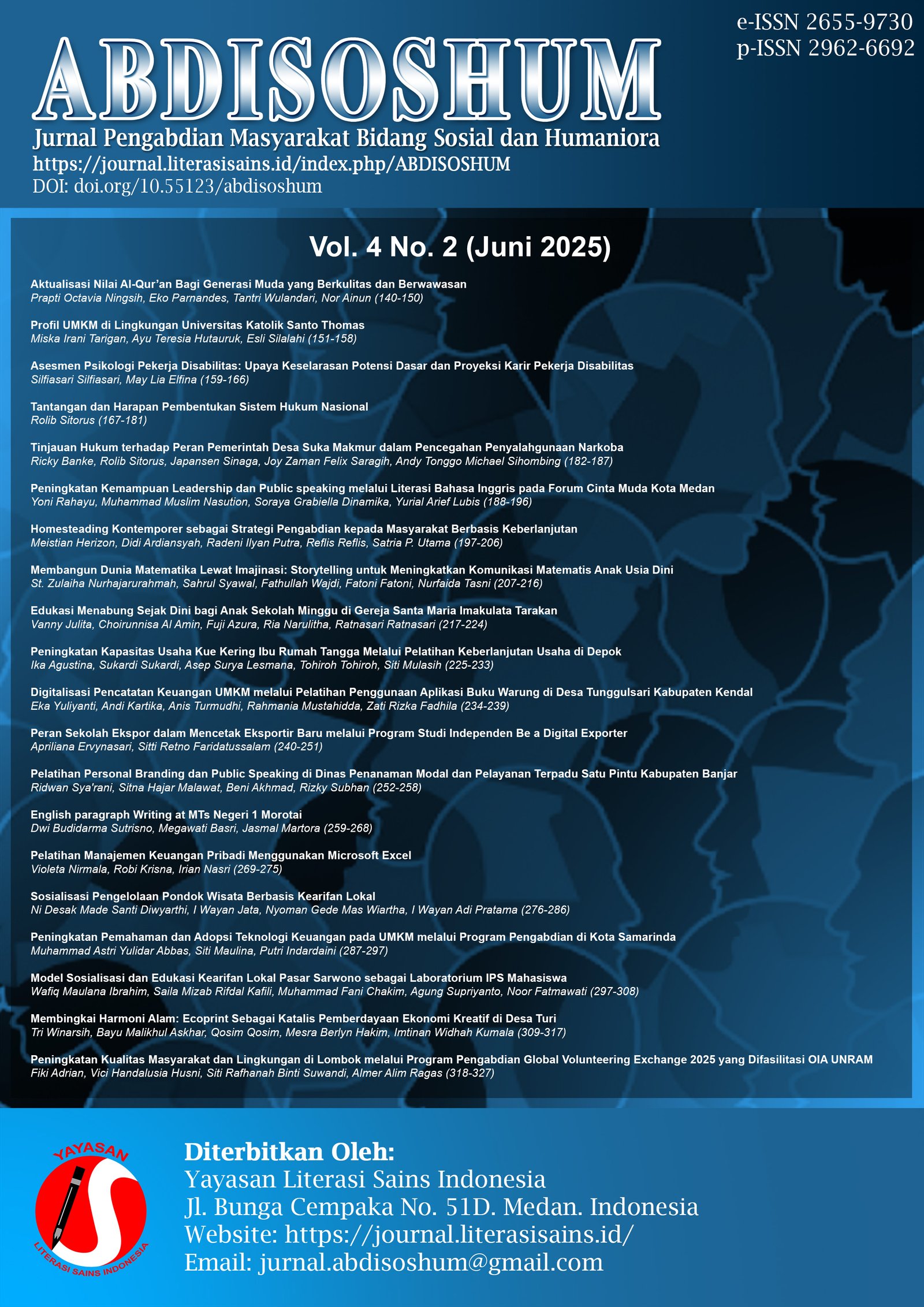
Peran Sekolah Ekspor dalam Mencetak Eksportir Baru melalui Program Studi Independen Be a Digital Exporter
DOI:
https://doi.org/10.55123/abdisoshum.v4i2.5362Keywords:
Export, Kampus Merdeka, Independency Study, Sekolah EksporAbstract
The number of active exporters in Indonesia remains low compared to the country’s vast national resource potential, particularly in the MSME sector. Low export literacy, complex regulations, and limited access to global markets are the main challenges. The Independent Study Program “Be a Digital Exporter” by Sekolah Ekspor offers a strategic solution through vocational and digital-based education. This study employs a descriptive qualitative method using participatory observation and questionnaires targeting participants of the 7th batch. The findings indicate that the program successfully enhanced participants’ understanding and export skills through practical learning based on the 7 in 1 Arrows of Export Management framework. Challenges such as miscommunication, technical difficulties, and heavy workloads were addressed through system adjustments, mentoring, and curriculum improvements. The program has proven to contribute significantly to participants’ readiness to become adaptive beginner exporters in global markets. Furthermore, collaboration with local MSMEs and the use of digital technology strengthen the competitiveness of Indonesian products. This study recommends enhancing mentor communication systems, expanding access to technology, and implementing continuous evaluation to support the acceleration of producing 500,000 new exporters by 2030.
References
Academy, E. (2025). Belajar Ekspor itu Mudah. https://nlc.aspenku.com/
Agustini, E. D., & Yarlina, L. (2015). Efektifitas dan Efisiensi Biaya Logistik Angkutan Udara di Bandar Udara Soekarno- Hatta Effectiveness and Efficiency of Air Transport Logistic in Soekarno-Hatta International Airport. Endang 1, 97–110.
Elvia Ivada, S. S., & Hamidi, N. (2014). Analisis Faktor Penghambat Ekspor Bagi UKM. Benefit: Jurnal Manajemen Dan Bisnis, Volume 18(1), 37–72. https://doi.org/10.23917/benefit.v18i2.1399
Ginting, A. M. (2013). Pengaruh nilai tukar terhadap ekspor Indonesia. Buletin Ilmiah Litbang Perdagangan, 7(1), 1–18.
Jaya, I. D., Hasmidyani, D., Budiman, M. A., & Maharrani, N. (2025). Mengenal Berbagai Metode Pembayaran Internasional Dalam Perdagangan Global. 2(5).
Jovansa N. K. Dheva, & Moch. T. Safirin. (2024). Upaya Mengenalkan Produk UMKM Damar Kurung Melalui Studi Independen Sekolah Ekspor. Journal of Student Research, 2(1), 350–356. https://doi.org/10.55606/jsr.v2i1.2659
Kementerian Perdagangan. (2025). Data Perdagangan Luar Negeri Ekspor Impor. https://doi.org/https://satudata.kemendag.go.id/data-informasi/perdagangan-luar-negeri/ekspor-impor
Mahani, K., Asmara, K., & Bachtiar, A. (2023). Analisis Peran Kepabeanan dalam Mendorong Ekspor di Negara Indonesia. Jurnal Ilmiah Wahana Pendidikan, 9(20), 403–408. https://jurnal.peneliti.net/index.php/JIWP/article/view/5320
Malahati, F., B, A. U., Jannati, P., Qathrunnada, Q., & Shaleh, S. (2023). Kualitatif : Memahami Karakteristik Penelitian Sebagai Metodologi. Jurnal Pendidikan Dasar, 11(2), 341–348. https://doi.org/10.46368/jpd.v11i2.902
Meirina, M., & Karmudiandri, A. (2022). Studi Independen Bersertifikat: Menjadi Eksportir Baru 4.0 Di Yayasan Sekolah Ekspor Nasional. CAPACITAREA : Jurnal Pengabdian Kepada Masyarakat, 2(02), 58–68. https://doi.org/10.35814/capacitarea.2022.002.02.8
Monika Kussetya Ciptani. (2004). Suatu Pendekatan Baru Dalam Product Development Costing Untuk Barang-Barang Industri. Jurnal Akuntansi Dan Keuangan, 1(2), 117–131. http://puslit2.petra.ac.id/ejournal/index.php/aku/article/view/15660
Mudassir, R. (2022). Kinerja Ekspor UMKM Indonesia Rendah, Kalah Dari Negara Tetangga. https://bisnisindonesia.id/article/kinerja-ekspor-umkm-indonesia-rendah-kalah-dari-negara-tetangga
PPEJP. (2025). EXPORT COACHING PROGRAM. https://ppejp.kemendag.go.id/site/export-coaching-program
Purba, P. B., Ika, JSimarmata, J., & Lakat, J. S. (2025). Pendidikan di Era Digital: Tantangan bagi Generasi Z (I. M. Nadeak (Ed.)). Yayasan Kita Menulis. https://repository.unugiri.ac.id:8443/7100/1/FullBook Pendidikan di Era Digital- Tantangan bagi Generasi.pdf
Rahayu, S., & Arianti, R. K. (2014). Persepsi National Branding Sebagai Upaya Meningkatkan Kinerja Ekspor Ke Jepang Dan Australia. Buletin Ilmiah Litbang Perdagangan, 8(2), 183–208. https://doi.org/10.30908/bilp.v8i2.82
Santoso, F., & Artha, B. (2021). Pengaruh Ekspor Terhadap Gross Domestic Product. JEMeS - Jurnal Ekonomi Manajemen Dan Sosial, 4(2), 10–22. https://doi.org/10.56071/jemes.v4i2.248
Sekolah Ekspor. (n.d.). Retrieved March 12, 2025, from https://sekolahekspor.com/
Sugiyono. (2023). Metode Penelitian Kuantitatif Kualitatif dan R&D (Sutopo (Ed.); Kedua). Alfabeta.
Undang-Undang Republik Indonesia. (2014). Undang-Undang Republik Indonesia No. 7 Tahun 2014 Tentang Perdagangan. LN.2014/No. 45, TLN No. 5512, LL SETNEG: 56 HLM, 1–56. https://peraturan.bpk.go.id/Home/Details/38584/uu-no-7-tahun-2014
Downloads
Published
How to Cite
Issue
Section
License
Copyright (c) 2025 ABDISOSHUM: Jurnal Pengabdian Masyarakat Bidang Sosial dan Humaniora

This work is licensed under a Creative Commons Attribution-ShareAlike 4.0 International License.












